
 By
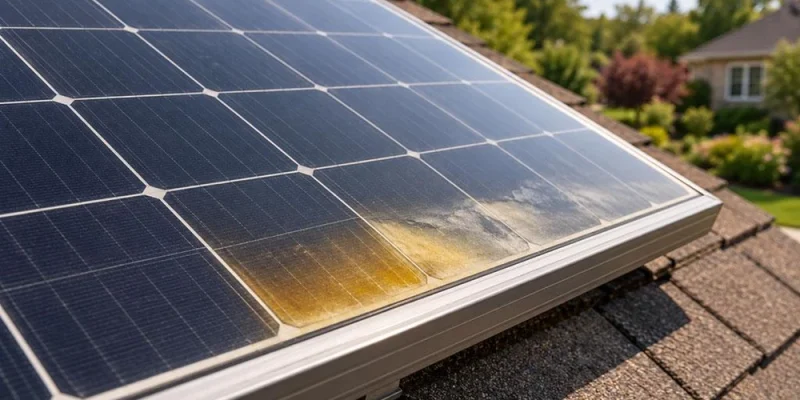
When homeowners compare solar panels, they usually begin with power output, price and appearance. Durability questions often receive less attention until a neighbor mentions yellowing or an online photograph shows bubbles beneath the glass. These concerns deserve a measured explanation. Understanding the difference between discoloration and layer separation can help you discuss product quality without assuming that every visible change represents the same problem.
Yellowing refers to a change in the color of material within the module, while delamination means a loss of bonding between layers. Their significance depends on their location, extent and effect on the assembly. The IEA PVPS review of photovoltaic module failures treats encapsulant discoloration and delamination as distinct failure categories. A photograph can raise a question, but a competent assessment is needed to establish what has happened.
Material formulation is part of that assessment. Exposure, additives and manufacturing conditions can influence how an encapsulant behaves over time. It is misleading to assume that every film within one polymer family will age identically. The IEA PVPS report on newer cell and module technologies emphasizes the influence of formulation and material compatibility on durability. This supports asking about the exact module construction and its evidence.
EVA encapsulation provides an example of why the specification matters. EVA solar film includes formulations developed around light transmission, adhesion and photovoltaic protection requirements. When reviewing an EVA-based module, ask the manufacturer how the selected film was processed and evaluated with the neighboring materials. The material family identifies a starting point for the discussion; the finished product’s documentation gives the discussion practical value.
POE encapsulation is another option manufacturers use when developing modules. B602 POE solar film is designed around optical transmission, moisture resistance, insulation and adhesion retention. These properties are relevant to encapsulation performance, but they do not make every POE-based module immune to discoloration or bonding problems. Ask the panel supplier for results that relate to the completed construction proposed for your roof.
For delamination, investigate the bonding system as a whole. The IEA PVPS technical-risk report identifies manufacturing and environmental contributors, including material compatibility, processing and stresses during service. This explains why choosing a film name cannot replace quality control. Ask how the manufacturer verifies lamination quality and how it controls approved materials and production changes.
Request an explanation of aging-test results. Which module construction was tested, what conditions were used, and which changes were measured afterward? Ask about optical appearance, adhesion and electrical performance rather than looking for a single pass statement. Where a supplier presents a film-level measurement, have them identify it clearly. A laboratory result is most useful when its scope and limitations are understandable.
Before purchase, read the appearance and performance provisions in the warranty. Ask whether a cosmetic change is assessed differently from an electrical fault, what documentation supports a claim, and who arranges an inspection. Clarify the respective roles of the installer and module manufacturer. If replacement is approved, ask how access, removal and reinstallation are handled under the written agreement.
At installation, retain the module references, serial numbers, commissioning information and clear photographs taken from an appropriate viewing position. Ask the installer to explain monitoring and approved maintenance procedures. If you later notice a change in color or a suspected bubble, document it and contact the service provider. Follow their guidance rather than attempting to separate layers, apply treatments or make an unsupported diagnosis from appearance alone.
A useful comparison between suppliers includes how they respond to questions. Invite each installer to explain its inspection process, escalation route and access to manufacturer support. Request an example of the information it would need to investigate a suspected material issue. Clear answers can help you judge the service arrangements you will rely on after the installation team has completed the job.
Consider how you would report a concern several years after installation. A useful message would identify the module location, describe when the change was first noticed and include dated photographs plus any relevant monitoring alerts. Ask the installer to confirm whether additional information is needed and who will review it. Keep the original images as well as any later photographs. This approach creates a record without deciding in advance that the film, glass or manufacturing process is responsible. The service team can then assess the observation against the product specification and the appropriate inspection procedures.
Before signing, place the warranty, approved module reference and service contacts beside the quotation. Resolve any unclear statements about yellowing, adhesion or aging evidence in writing. Keep the resulting documents in your home’s maintenance file and set up the monitoring access during handover. That gives you a defined starting record and a practical route for reporting changes if they appear during ownership.
Comments