
 By
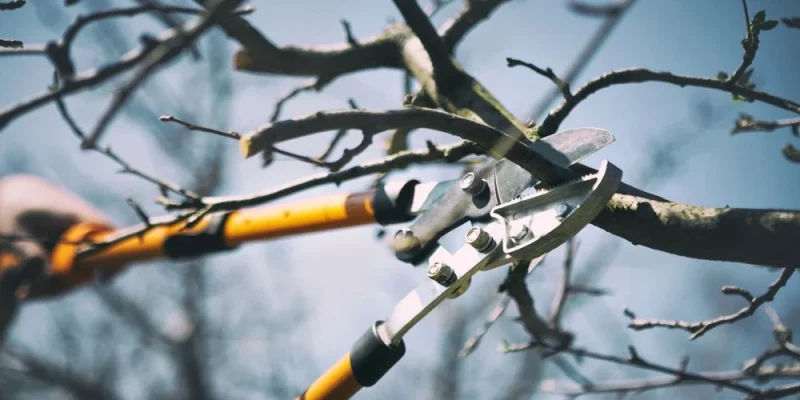
Trees respond to a pruning cut by walling off the wound. That response runs fastest just before spring growth, when the tree’s energy reserves are at their highest.
A late-winter cut also sits open for only a short time before new growth starts closing it.
Bare branches help as well. With the leaves gone, crossing limbs, weak forks, and the overall shape of the tree are much easier to see.
Fewer insects and disease organisms are active in the cold, so a fresh cut is less likely to pick something up.
Two Windows Worth Avoiding
The first is spring leaf-out. While leaves are forming, the tree’s reserves are low and the bark slips and tears easily.
The second is fall, while the leaves are dropping. Trees are growing new absorbing roots then, and cuts made in autumn are more likely to dry out and die back.
Trees That Flower in Spring
Trees and shrubs that bloom early in spring form their flower buds the year before. Prune them in late winter and you cut off this year’s flowers.
Prune these right after they finish blooming. Redbud, dogwood, magnolia, lilac and flowering cherry all belong in this group.
Trees that flower in summer or fall bloom on new growth, so late-winter pruning suits them fine.
Crabapple, hawthorn, pear and mountain ash are the exception. They’re prone to fireblight, a bacterial disease that pruning can spread, so prune them only while they’re dormant.
The timing tips in this guide come from Mike’s Professional Tree Service, a Rhode Island tree care company that has pruned and removed trees since 1992.
Maples, Birches and Other Sap Bleeders
Cut a maple or birch in late winter and sap may drip from the wound. It looks alarming, but it generally doesn’t harm the tree.
If the dripping bothers you, prune these trees once their leaves have fully opened in late spring or early summer. Walnuts belong in this group too.
Oaks, Elms and Disease Timing
Fresh pruning wounds give off scents that draw insects. On oaks, that can mean the beetles that spread oak wilt, and on elms, the bark beetles that carry Dutch elm disease.
The USDA Forest Service’s How to Prune Trees guide says the best time to prune these species is usually late fall and winter.
Where oak wilt is present, avoid pruning oaks in spring and early summer. Timing varies by region, so check with your local extension office before cutting an oak in the growing season.
If an oak or elm gets wounded in that risky window, say by a storm, cover the wound right away. It’s one of the few cases where a wound dressing helps.
For most other cuts, dressings aren’t needed and can even slow the wound from closing.
Honeylocust is another one to prune while dormant. Late-winter cuts help it avoid stem cankers.
Dormant pruning has one more perk. With fewer disease organisms around, there’s less need to disinfect your tools between cuts.
Pines, Spruces and Other Evergreens
Conifers can be pruned any time of year. Pruning them while they’re dormant keeps sap and resin flow to a minimum.
Newly Planted Trees
Young trees that get proper pruning early usually have fewer structural problems as they mature.
At planting time, though, keep it light. Trees settle in faster when that first pruning is limited to weak, dead, diseased, rubbing, or injured branches.
Resist the urge to thin a young tree’s crown. It needs those leaves to make food for new roots.
Dead and Broken Branches Can’t Wait
Timing rules don’t apply to dead, broken, or diseased limbs. Take them off any time of year, as soon as you notice them.
Storm damage, a cracked limb over the driveway, or a dead branch hanging over the roof all belong here.
If a branch is anywhere near a power line, leave it alone and call your utility company.
How Much to Take Off at Once
Prune for safety first, then health, and looks last.
Remove no more than about a quarter of a tree’s living crown at one time. If it needs more, spread the work over a few years.
Skip topping. Cutting main stems back to stubs invites decay, which can work its way into the trunk and weaken the tree.
A Quick Pruning Calendar
- Late winter: most shade trees, summer and fall bloomers, and fireblight-prone trees.
- Right after flowering: spring bloomers like redbud, dogwood, magnolia and lilac.
- Late spring to early summer, once leaves are full size: maples, birches and walnuts, if dripping sap bothers you.
- Any time: dead, broken, or diseased branches, plus pines, spruces, and other conifers.
- Hold off: during spring leaf-out, during fall leaf drop, and on oaks in spring and early summer where oak wilt is present.
If a job means climbing, running a chainsaw overhead, or dropping limbs near the house, that’s the point to bring in a professional.










Comments