
 By

You walk downstairs and smell it again. That damp, earthy, old-book smell. You check the walls and the corners, and nothing looks wrong.
That smell is worth taking seriously. Mold often grows where you can’t see it, and the odor usually shows up well before any stain does.
Why your nose finds mold before your eyes do
The musty smell comes from gases mold gives off as it grows. Those gases travel through drywall seams, outlets and floor gaps.
The EPA’s own advice is to look for mold in damp places and anywhere that smells musty. In other words, follow your nose first.
“But Denver is dry,” and why that’s only half true
Denver really is dry. National Weather Service data puts normal yearly precipitation at roughly 14.5 inches, far below most of the country.
Dry outdoor air doesn’t protect a house from leaks, though. Mold in Denver homes almost always comes from a local moisture source inside or right next to the house.
Where to look first in a Denver home
Finished basements
This is where most Denver musty smells start. Moisture from the foundation wall gets trapped behind drywall, carpet pad and baseboards.
The ground plays a part too. The Colorado Geological Survey calls expansive soil the state’s most significant geologic hazard, and soil that swells and shrinks can crack foundations.
Check the bottom few inches of drywall, the tack strip under the carpet, and any wall that sits against soil outside.
Crawl spaces
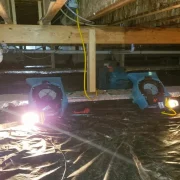
The EPA lists humid crawl spaces as common spots for hidden mold, especially ones with a bare dirt floor. The soil keeps feeding moisture into the air.
If the smell gets stronger near floor vents or in rooms above the crawl space, start your search there.
Swamp coolers
A lot of older Denver homes still run evaporative coolers. They work by adding water to the air, and pads that stay wet can grow mold and push that smell through the house.
If the odor shows up mostly in summer, or right after you turn the cooler on, check the pads, the water pan and the duct where the unit connects.
“In Denver, the smell almost always leads back to water you can’t see yet,” says Andy Bell, whose team handles mold cleanup for East Denver homes. “We find it behind finished basement walls, under carpet pad and around old swamp cooler ducts far more often than out in the open.”
Furnace humidifiers and HVAC drain pans
Plenty of Denver homes add a whole-house humidifier to fight the dry winter air. Set too high, it can cause condensation inside ducts and on cold exterior walls.
On the cooling side, keep drip pans clean and drain lines flowing. A clogged condensate line is easy to miss.
Window wells and sprinkler lines
Window wells collect snowmelt and spring rain, and that water often finds its way behind basement window frames. Look for soft trim or peeling paint around the frame.
Sprinkler heads that spray against the foundation do the same thing all summer. One misaimed head can keep a basement wall damp for months.
Attics after heavy snow
Ice dams and slow roof leaks during snowmelt can soak insulation without leaving a ceiling stain. Check the attic side of the roof deck for dark spots or damp insulation.
Under sinks, behind the washer and the fridge
A slow drip from a supply line or drain can run for months before anyone notices. Pull appliances out and check the wall and floor behind them.
If the smell is stronger near a wall outlet, mold may be growing behind that wall. The odor escapes through the outlet opening.
Check your indoor humidity
A cheap hygrometer from a hardware store will tell you a lot. The EPA recommends keeping indoor relative humidity below 60 percent, ideally between 30 and 50 percent.
If one room reads much higher than the rest of the house, that room probably has your moisture source.
When to stop searching and call someone
Some hidden mold is too hard to find on your own. Professionals use moisture meters and other tools to track down wet areas behind walls and under floors.
Fix the water source before anything else. If you clean the mold and leave the leak, it will come back.
Size matters too. The EPA recommends hiring a pro for any moldy area larger than about 10 square feet, and for any mold inside your HVAC system.
The bottom line
A musty smell with no visible mold usually means a hidden moisture problem, not a mystery. In Denver, start with the basement, the crawl space and anything that uses water, then work outward.
Find the water, fix it, and deal with the growth properly. The smell goes away once the source is actually gone.







Comments