
 By
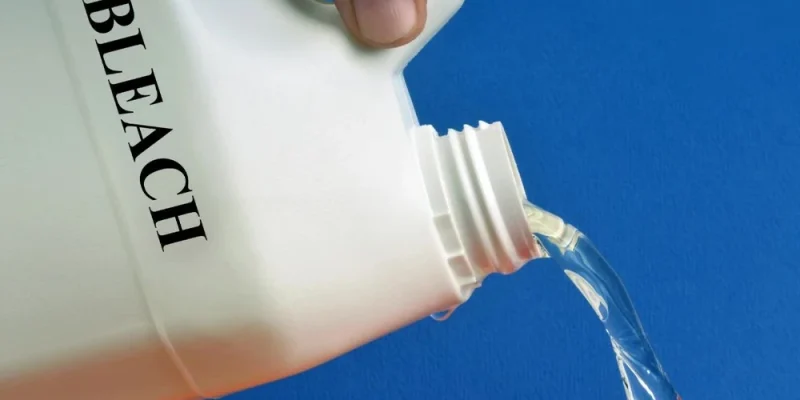
You spray the black spots on the bathroom ceiling, wait a few minutes, and wipe. The ceiling looks clean. A few weeks later, the spots are back, often in the same shape.
Plenty of homeowners go through that cycle more than once, and a bottle of bleach is usually part of it.
What bleach does to a moldy surface
Chlorine bleach is very good at removing color. On a hard, nonporous surface like glazed tile or a tub, it can lift stains and wipe away some of the growth.
What it can’t do is dry the wall or stop the leak. Shower steam, a slow drip or damp air will keep feeding the next round of growth.
The EPA’s brief guide to mold, moisture and your home doesn’t recommend biocides like bleach as a routine part of mold cleanup. It focuses on removing the mold and fixing the moisture.
Porous materials hold mold where you can’t reach it
Drywall, ceiling tiles, carpet, wood, and insulation are full of tiny gaps. Mold can grow into those spaces as well as across the surface.
The EPA notes that porous materials like ceiling tiles and carpet may need to be thrown away once they’re moldy. Mold that fills their crevices can be hard or impossible to remove completely.
So a bleached patch of drywall can look clean while mold remains below the surface. When the area gets damp again, the spots come right back.
Dead mold can still cause problems
Even when bleach kills the mold it touches, the job isn’t finished. According to the EPA, dead mold may still cause allergic reactions in some people.
That’s why its guidance says killing mold isn’t enough. The growth has to be physically removed from the surface or cut out with the material it’s growing in.
Signs the mold is hiding where you can’t see it
A room that smells moldy when you can’t spot the source is a common clue. The EPA lists the back side of drywall, wallpaper, and paneling as places where hidden mold can grow.
It can also sit on the top side of ceiling tiles, under carpet and padding, and inside walls around leaking or sweating pipes.
Be careful about opening up a suspect area yourself. The EPA warns that peeling off wallpaper with mold underneath can release a large burst of spores.
If you think mold is growing out of sight, the EPA suggests bringing in an experienced professional to investigate.
Moisture is what brings it back
The EPA’s guidance puts it plainly: the key to mold control is moisture control. Mold returns to the same spots because those spots stay damp.
Common sources of that dampness include:
- Bathrooms without a working exhaust fan, or one nobody runs
- Slow leaks under sinks, around toilets, or behind shower walls
- Roof or window leaks that wet drywall from inside the wall
- Crawl spaces and basements with poor drainage
- Indoor humidity that stays high through the muggy months
The EPA recommends keeping indoor humidity below 60 percent, and ideally between 30 and 50 percent. An inexpensive hygrometer will show you where your home sits.
Damon Thompson, who co-owns FloodSERV in McAlester, Oklahoma, sees that pattern on repeat mold calls.
“When mold comes back, there’s almost always a leak or a humidity problem nobody fixed,” he says.
“We remove the growth and dry the structure, and the repair itself goes to a plumber or roofer. Skip that repair, and the mold usually finds its way back.”
A better way to handle a small mold problem
If the moldy area is less than about 10 square feet, roughly a 3-foot by 3-foot patch, the EPA says most homeowners can handle the cleanup themselves.
- Find the water source and get it fixed. Cleanup isn’t finished until the moisture problem is.
- Put on gloves, goggles, and a properly fitted N-95 respirator.
- Scrub hard surfaces with detergent and water, then dry them completely.
- Bag and throw out moldy porous items like ceiling tiles, carpet pads or insulation.
- Keep the area dry and check it again over the next few weeks.
If you do use bleach on a hard surface, never mix it with ammonia or with cleaners that contain ammonia. The EPA warns that the combination can produce toxic fumes.
When to call a professional
Some mold problems are bigger than a weekend project. It’s time to bring in a remediation company when:
- The affected area is larger than about 10 square feet
- The mold came back after you already cleaned it
- The water damage came from sewage or other contaminated water
- You suspect mold inside your heating and cooling system
If anyone in the home has health concerns, talk with a health professional before cleanup starts. The EPA also advises against running an HVAC system you know or suspect is contaminated with mold.
A remediation crew can contain the area, remove damaged materials, clean what can be saved, and dry the structure. The leak or humidity problem still needs its own fix from the right trade.
Fix the moisture before you reach for the bleach
Bleach can make a moldy spot look better for a few weeks. Lasting results come from removing the growth and keeping the area dry.
Stop the leak, bring the humidity down, and replace what can’t be cleaned. That takes away the moisture mold needs to return.






Comments