
 By
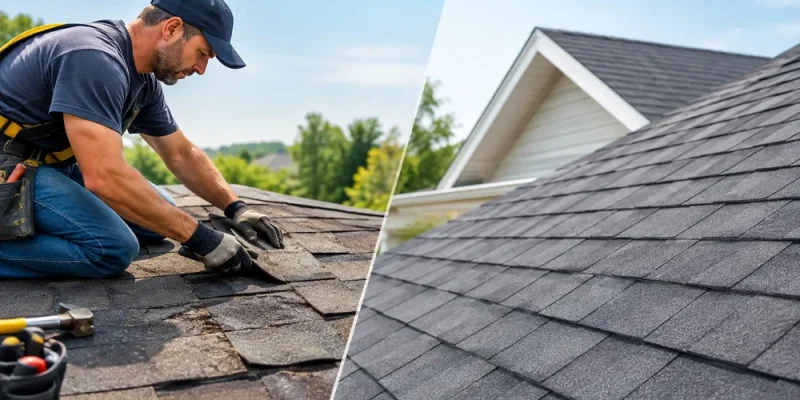
Drive through almost any newer neighborhood in Troy, Missouri, and you’ll notice the roofs look like siblings. Much of the town’s housing went up in a fast wave as Lincoln County grew into a commuter base for St. Charles and St. Louis jobs. Whole streets were finished within a few years of each other, often with the same builder grade shingles.
That shared birthday creates a shared problem. Those roofs are reaching the same age together, and homeowners on the same block keep hearing two answers to one question. One roofer says a repair will hold. Another says the whole thing needs to come off.
Plenty of that local housing stock was shaped by builders from just up the road. The Bowling Green team behind gandkconstruction.net, started in 2016 by Gary and Kimberly Zappala, has built new homes on Troy streets such as Shady Trail Drive, Auburn Ridge Drive and Cuivre Creek Drive. It also handles roof repairs, full replacements and new construction roofing across Lincoln, Warren, St. Charles and St. Louis counties. That makes it a useful roofing company in Troy to compare against when a repair quote and a replacement quote land on the same kitchen table.
Neither answer is automatically the honest one. What matters is reading your roof well enough to know which one it deserves.
Small Problems a Good Patch Can Outlive
Many leaks have nothing to do with the shingles themselves. The rubber collars around plumbing vents tend to crack years before the roof around them wears out. Replacing those boots is a short, inexpensive job that stops a surprising number of ceiling stains.
Flashing is the other common culprit. The metal at chimneys, sidewalls and skylights can lift or lose its sealant while the field shingles stay perfectly sound. Reflashing one problem area is a textbook repair.
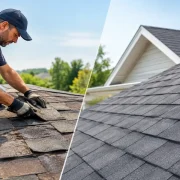
Wind damage often belongs in the same category. A summer gust that peels off a handful of shingles along one edge leaves a roof that is still healthy everywhere else. If the surrounding shingles are flexible, still seal down and hold their granules, matching pieces can be slipped in. The roof keeps doing its job for years.
Signs the Whole Roof Has Run Its Course
Some symptoms show the entire surface is wearing out rather than one spot failing. Look for these on a calm afternoon from the yard, through binoculars, or from a ladder at the gutter line without walking the roof.
- Granules collecting in gutters and downspout splash zones after every rain, with dark bare patches showing on the shingles.
- Shingle edges curling upward or the middles cupping, a sign the asphalt has dried and lost its flexibility.
- Cracks running across shingles on more than one slope.
- Leaks showing up in different rooms, which means water is finding many weak points, not one.
- A roofline that dips or feels spongy underfoot, which points to trouble in the decking below.
Any one of these in isolation can sometimes be managed. Two or three together usually mean repairs will only buy months, not years.
Hail Muddies Everything
Eastern Missouri sees its share of spring hail, and hail blurs the line between repair and replacement. A storm can bruise shingles without knocking them loose. The damage shows up as small soft spots where granules were crushed away. From the ground, the roof may look fine.
Insurance adjusters generally separate functional damage, which shortens the roof’s life or lets water in, from cosmetic marks that don’t. When damage is spread across several slopes, a full replacement claim is common. When it’s limited to one face, you may be offered a partial repair instead. Matching then becomes the sticking point, since shingle colors from fifteen years ago are often discontinued. Ask early how a mismatched slope would be handled, before you accept a settlement.
The Plywood Nobody Sees Until Tear Off
A roof is more than its top layer. Under the shingles sits the decking, usually oriented strand board or plywood, plus underlayment and a ventilation system that lets the attic breathe. Poor attic ventilation bakes shingles from below in July and traps moisture in January. That is a big reason some roofs in the same subdivision age faster than others.
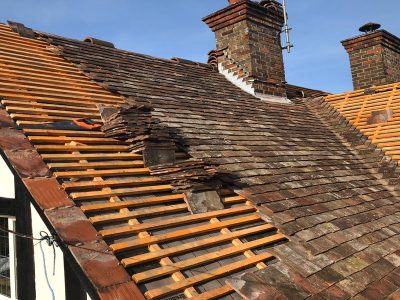
This hidden layer also limits your options. Building codes allow only so many layers of shingles. If a previous owner already roofed over the original, a new layer can’t simply go on top. A tear off becomes mandatory, and the condition of the decking won’t be known until the old material is gone. A careful contract states a per sheet price for any rotted decking, so a surprise doesn’t become a blank check.
Doing the Math Without a Calculator
Roofers tend to use a rough rule of thumb. If a repair costs more than a quarter to a third of a full replacement, or if the roof is in the last few years of its expected life, replacement usually wins over time. Standard architectural shingles typically last somewhere in the twenty to thirty year range in this climate. Older three tab shingles often wear out sooner.
The other number to weigh is how long you plan to stay. Someone selling next spring may sensibly choose a clean repair and a disclosure. A family planning to stay another decade will likely spend that repair money twice before the roof is replaced anyway.
Before work starts, check with the city about permits. Requirements inside Troy’s limits can differ from those in unincorporated Lincoln County, and a reputable crew will know which applies to your address.
If You Replace, Build for the Next Storm
A replacement is a chance to choose materials with Missouri weather in mind. Impact resistant shingles cost more upfront, but some insurers offer premium discounts for them. Not every product sold as impact resistant performs the same, though. The Insurance Institute for Business & Home Safety hail shingle ratings show how specific shingles hold up when struck by large hailstones in lab testing. They are worth checking before you settle on a brand.
The same upgrade conversation should cover synthetic underlayment, ice and water barrier along eaves and valleys, new drip edge and fixes to attic ventilation. These pieces cost little next to the shingles, and they decide whether the new roof reaches its full lifespan.
Timing the Decision Around the Weather
Season matters more than many homeowners expect. Shingles rely on the sun’s warmth to seal their adhesive strips. Mild fall days are often ideal for a replacement, while deep winter installs may need hand sealing to hold against wind. Late spring brings the busiest stretch for local crews, after storm season sends everyone looking for a roofer at once.
If your roof is borderline, an inspection in late summer gives you room to plan. You can make a repair now and budget for replacement, or schedule a full roof during the calm months, without making the call under a dripping ceiling.



Comments