
 By
By 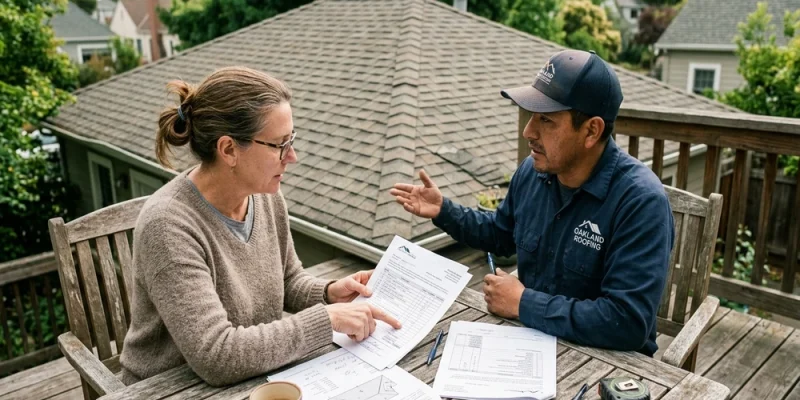
A roofing estimate is easy to skim. You look at the total, check whether it is higher or lower than the other quotes, and move on. But the number at the bottom is the least informative part of the document. Two estimates with very different prices can describe very different jobs, and two with similar prices can hide gaps that show up as extra charges later. Here is how to read an estimate one line at a time, so you know exactly what you are buying.
The scope of work
Start at the top, where the contractor describes what will be done. A clear scope says whether the old roof will be torn off completely or covered over, how many layers will be removed, and which parts of the house are included, such as the main roof, a garage, or a porch. It should list the size of the roof, often in squares, where one square equals 100 square feet.
Vague phrases like “replace roof” are not enough. If you cannot tell from the paper what will happen on the first day, the estimate needs more detail.
Materials
This is where quotes differ most. A good estimate names the shingle brand, product line, and color, not just “architectural shingles.” It also lists the underlayment, ice and water barrier where it is used, starter strips, ridge caps, and fasteners. Each of these affects how long the roof lasts and how well it handles weather.
When you request an estimate from Star 1 Roofing and Construction or any other contractor, ask for the specific products by name and request the manufacturer’s product pages. Then compare like with like. A cheaper quote that uses a lower grade shingle or skips the underlayment is not really cheaper.
Decking, flashing, and ventilation
The roof deck, the flashing, and the vents are less visible than shingles, but they decide whether the roof performs. Ask how the contractor handles rotted or damaged decking once the old layer is off. Many estimates quote a price per sheet or per board for replacement, which keeps the base price low and lets you know the cost of surprises in advance.
Check for new flashing at chimneys, walls, valleys, and pipes, and for a drip edge along the eaves. Reusing old, worn flashing under a new roof is a common shortcut. Also look for ventilation. The estimate should say whether existing vents will be reused or replaced and whether the attic will have enough intake and exhaust.
Permits, cleanup, and disposal
A complete estimate states who will pull permits and pay for them, what happens to the old materials, and how the property will be protected and cleaned. Look for details such as tarps over landscaping, protection for siding and windows, and a magnetic sweep of the yard to pick up stray nails. These items may seem minor, but they are the difference between a roof job and a roof job that leaves a mess behind.
Warranties
There are usually two kinds of warranty, and they cover different things. The manufacturer’s warranty covers the materials, while the contractor’s warranty covers the workmanship. The estimate should say how long each lasts, what it covers, whether it can be transferred if you sell the house, and whether any registration is needed. Ask to see the actual warranty documents, not just a line on the estimate.
Price, payment, and changes
Finally, the numbers. The Federal Trade Commission advises in its guide on how to avoid a home improvement scam that you should get multiple estimates, that a written estimate should include a description of the work, the materials, the completion date, and the price, and that you should not automatically choose the lowest bidder. It adds that contract requirements vary by state, and that you should ask for a written agreement even where one is not required.
Read the payment schedule closely. A reasonable plan ties payments to progress, not to a large payment before any work starts. Look for a clear process for change orders as well, so any added work, such as extra decking repairs, is approved in writing before it is done and does not appear as a surprise on the final bill.
Red flags when comparing quotes
A few warning signs show up again and again. Be cautious about an estimate with no written materials list, a price that is far below the others with no explanation, pressure to sign immediately, a request for a large deposit, or a refusal to put promises in writing. Ask each contractor for proof of insurance and references from recent jobs, and take the time to call a few.
When the numbers differ, ask why. A good contractor can explain the difference in scope or materials in plain terms. If two estimates look alike on paper but one is much higher, ask the higher one what you would be getting for the extra cost.
Putting it all together
A roofing estimate is a description of a job before it happens, and the more it says, the less is left to argument later. Check that the scope is specific, the materials are named, the hidden items like decking, flashing, and ventilation are covered, permits and cleanup are included, the warranties are in writing, and the payment terms are fair. Then compare estimates side by side on those same points, not just on the total.
Take your time, ask questions, and do not sign anything you do not fully understand. A clear, detailed estimate is a good sign about how the job itself will go, and a thorough comparison is the best protection you have against surprises once the old roof comes off.





Comments