
 By
By 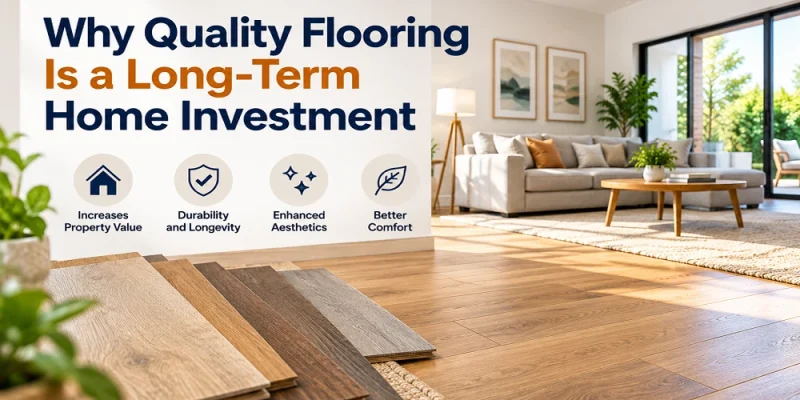
Flooring is one of those home decisions that’s easy to underestimate. It doesn’t have the visual drama of a kitchen renovation or the immediate impact of a fresh coat of paint, yet it covers more surface area than almost any other material in a home and gets used, walked on, and lived on every single day. Choosing quality Midland flooring isn’t simply a design decision , it’s a long-term investment that pays off in ways that become increasingly clear the longer a homeowner lives with the choice.
Flooring Sees More Daily Wear Than Almost Any Other Surface
Few surfaces in a home experience the kind of constant, direct contact that flooring does. Foot traffic, furniture movement, pet activity, spills, and general daily life all put continuous stress on flooring in a way that walls, ceilings, and most other surfaces simply don’t experience. Lower-quality materials show this wear quickly , scratches, fading, warping, or a general tired appearance within just a few years of installation.
Quality flooring, built with better materials and more durable construction, withstands this daily wear considerably better, maintaining its appearance and structural integrity for a much longer period. Given how much use flooring actually receives, its durability matters more than almost any other material choice made throughout a home.
Material Choice Directly Affects Long-Term Cost
It’s tempting to evaluate flooring primarily by upfront cost, but the real cost of a flooring choice unfolds over its entire lifespan, not just at the point of purchase. A lower-cost material that needs replacing within a decade can end up costing more over time than a higher-quality option that lasts twice as long, once replacement costs and the disruption of another renovation are factored in.
This is particularly true for engineered hardwood and quality vinyl products, which are specifically designed to offer better long-term durability and moisture resistance than lower-grade alternatives, reducing the likelihood of premature replacement due to warping, water damage, or general wear.
The Right Material Matters as Much as the Right Quality
Beyond overall build quality, choosing the right type of flooring for a specific space significantly affects long-term satisfaction and durability. Areas prone to moisture, like basements or bathrooms, benefit from waterproof options like luxury vinyl, which can withstand conditions that would damage traditional hardwood over time. High-traffic areas benefit from durable, easy-to-maintain surfaces like porcelain tile, which holds up well under heavy use without showing the wear patterns that softer materials might develop.
Matching material to the specific demands of each space, rather than choosing a single flooring type throughout a home regardless of its actual conditions, protects the investment by ensuring each area’s flooring is genuinely suited to how it will actually be used.
Proper Installation Protects the Investment as Much as Material Choice
Even the highest-quality flooring material won’t perform as expected if it’s installed poorly. Substrate preparation, appropriate spacing for material expansion, and proper installation techniques all significantly affect how flooring performs and how long it lasts. Flooring installed without proper preparation can develop issues , buckling, gaps, uneven wear , regardless of how good the underlying material actually is.
This is why the value of a flooring investment depends on both material quality and installation expertise working together. Skipping proper preparation to save on upfront installation costs often undermines the very durability that a quality material was chosen to provide in the first place.
Quality Flooring Supports Resale Value
For homeowners who may eventually sell their property, flooring condition plays a meaningful role in how a home is perceived by potential buyers. Worn, dated, or damaged flooring creates an immediate impression that can affect a buyer’s overall assessment of a home’s condition, even when other aspects of the property are well maintained. Quality flooring that has held up well over time continues to present a home favorably, supporting stronger resale value compared to flooring that shows its age prematurely.
This makes flooring one of the more visible, high-impact factors in how a home is perceived on the market, disproportionate to the relative cost of the material itself compared to larger renovation projects.
Compatibility With Home Systems Adds Long-Term Value
Flooring that’s compatible with systems like radiant floor heating adds functional value beyond appearance and durability alone, allowing homeowners to integrate comfort features that enhance daily living. Choosing flooring with this kind of long-term functional compatibility in mind, rather than focusing purely on appearance, ensures the investment continues to serve the home well as needs and preferences evolve over time.
The Bottom Line
Flooring deserves to be evaluated with the same long-term thinking homeowners apply to major structural or mechanical investments, not treated as a purely cosmetic decision. Durability, proper material matching, quality installation, and resale considerations all combine to make flooring one of the more consequential choices in a home, even though its impact often goes unnoticed until years later, when a well-chosen floor continues to look and perform beautifully while a poorly chosen one has already needed replacement.



Comments